La Familia Michoacana (LFM), also known as La Familia (“The Family”), is a Mexican transnational criminal organization that originated in the state of Michoacán in the mid-2000s. Once notorious for its quasi-religious ideology, extreme violence, and methamphetamine production, the original LFM largely fragmented after major leadership losses in the early 2010s. 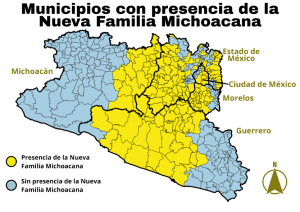 As of February 2026, its most prominent successor is La Nueva Familia Michoacana (LNFM, or New Family Michoacana), a violent splinter group active primarily in Guerrero, parts of Michoacán, the State of Mexico (Edomex), and surrounding areas. Designated by the United States as a Foreign Terrorist Organization (FTO) and Specially Designated Global Terrorist (SDGT) on February 20, 2025, LNFM is accused of fueling the U.S. fentanyl crisis through large-scale trafficking of synthetic opioids, methamphetamine, heroin, and cocaine, alongside human smuggling, extortion, kidnappings, and drone-based bombings on rivals.
Origins and Unique Ideology
La Familia Michoacana emerged around 2006 as a splinter from alliances involving the Gulf Cartel and Los Zetas, initially positioning itself as a protector of Michoacán communities against Zetas incursions. Founded by figures like Nazario Moreno González (alias “El Chayo” or “El Más Loco”), the group blended brutal criminality with a pseudo-Christian fundamentalist doctrine. Members carried Bibles, quoted scripture, and distributed pamphlets promoting family values, discipline, and “divine justice” while committing atrocities—such as the infamous 2006 Uruapan incident where severed heads were rolled into a nightclub with a message of retribution.
LFM specialized in methamphetamine production (using imported precursors), marijuana cultivation, and extortion of local businesses (especially iron ore mining and avocado production in Michoacán). It gained notoriety for public displays of violence, including mutilations, beheadings, and messages left on bodies claiming moral or religious justification. The group’s Robin Hood-like image, distributing aid to the poor, helped it embed in communities amid weak state presence.
Key Leaders and Major Splits
- Nazario Moreno González (“El Chayo”): Charismatic founder and spiritual leader; falsely reported dead in 2010, confirmed killed in a 2014 shootout.
- Servando Gómez Martínez (“La Tuta”): High-ranking lieutenant who split in 2011 to form the Knights Templar (Caballeros Templarios), inheriting much of LFM’s ideology and territory.
- José de Jesús Méndez Vargas (“El Chango”): Took control of remaining LFM cells post-split; arrested in 2011, leading authorities to declare the group “disbanded” (though it persisted in diminished form).
These fractures produced successors like the Knights Templar (largely dismantled by 2015–2017 via self-defense groups and arrests) and smaller remnants. By the mid-2010s, LFM cells operated locally in Michoacán, Guerrero, and Edomex, focusing on extortion and retail drug sales while losing ground to the rising CJNG and Cárteles Unidos (United Cartels).
Current Status: La Nueva Familia Michoacana (as of February 2026)
The revived and rebranded La Nueva Familia Michoacana (LNFM) has emerged as the dominant heir, centered in Guerrero and southern Edomex. Co-led by brothers Johnny Hurtado Olascoaga (aliases “El Pez,” “Pescado,” “Mojarra”) and José Alfredo Hurtado Olascoaga (“El Fresa,” “El Feyo,” “La Fruta”)—both fugitives in Mexico—the group has adapted to modern threats:
- Activities: Major trafficking of fentanyl (produced from precursors), meth, heroin, and cocaine into the U.S.; money laundering through U.S. networks; extortion of businesses and communities; kidnappings; migrant smuggling; and innovative violence (e.g., explosive-laden drones against rivals, disregarding civilian safety).
- Territory: Strong in Guerrero (with influence in mining/avocado zones), Edomex (southern regions), and pockets of Michoacán; presence in Mexico City and other central states.
- Alliances/Conflicts: Clashes with CJNG and other groups; occasional tactical alignments amid broader rivalries.
U.S. pressure has intensified: Indictments in April 2025 (Northern District of Georgia) charged the Hurtado brothers with conspiracies related to drug importation/distribution. OFAC sanctions targeted them and siblings (e.g., Ubaldo and Adita Hurtado Olascoaga). Rewards total up to $8 million for information leading to their capture. Earlier designations (2022 under drug proliferation E.O., upgraded to FTO/SDGT in 2025) reflect LNFM’s role in the opioid epidemic and domestic terrorism in Mexico.
Violence persists in contested areas, with extortion and territorial disputes driving homicides and displacements, though less dominant nationally compared to Sinaloa or CJNG conflicts.
Impact and Legacy
La Familia Michoacana pioneered the fusion of religious rhetoric with organized crime, inspiring groups like the Knights Templar and influencing ideological elements in others. Its fragmentation exemplifies how Mexico’s “kingpin strategy” weakens but rarely eliminates cartels—splinters adapt, diversify (e.g., into extortion and precursor chemicals), and survive.
Today, LNFM represents a persistent threat: a decentralized yet resilient network poisoning U.S. communities with fentanyl while terrorizing Mexican regions through violence and economic control. Amid U.S.-Mexico tensions over border security and designations as terrorist entities, the group’s endurance highlights the challenges of combating entrenched, evolving criminal organizations driven by profit, local power, and weak governance.