The Cártel de Santa Rosa de Lima (CSRL, or Santa Rosa de Lima Cartel), a Mexican criminal organization originating in Guanajuato state, is one of the country’s most prominent groups specializing in large-scale fuel theft (known as huachicoleo). As of February 2026, CSRL has been sanctioned by the United States under Executive Order 13851 as a significant transnational criminal organization (December 17, 2025, OFAC designation), though it has not received a full Foreign Terrorist Organization (FTO) label like CJNG or others. The group remains a key driver of violence in Guanajuato, one of Mexico’s deadliest states, through its ongoing feud with the CJNG over control of Pemex pipelines, refineries (especially in Salamanca), and related black-market profits. Despite major leadership setbacks and territorial erosion, CSRL persists as a fragmented network of cells involved in fuel theft, extortion, local methamphetamine sales, kidnappings, and selective homicides.
Origins and Rise as Huachicoleros
CSRL emerged between 2010 and 2014 in the industrial corridor of Guanajuato, a region crisscrossed by Pemex pipelines and home to major refineries like Salamanca. Unlike traditional drug cartels, CSRL was born from local gangs focused on tapping fuel lines for resale on the black market, capitalizing on rising fuel prices, energy sector vulnerabilities, and weak enforcement.
Under José Antonio Yépez Ortiz (alias “El Marro” or “the sledgehammer”), the group consolidated around 2015 into a structured organization.
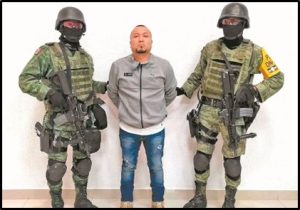
El Marro built industrial-scale operations, reportedly stealing millions in fuel daily, controlling clandestine taps, illegal transport routes, and entire communities. By 2017–2018, CSRL declared open war on the expanding CJNG for dominance in the “Bermuda Triangle” (Salamanca-Irapuato-Celaya area), leading to extreme violence: beheadings, massacres, explosive devices near Pemex facilities, and public threats.
Key Leaders and Fragmentation
- José Antonio Yépez Ortiz (“El Marro”): Founder and longtime leader; arrested August 2020 in Juventino Rosas, Guanajuato; sentenced to 60 years in 2022 for kidnapping (facing additional charges like organized crime, money laundering, illegal fuel extraction). U.S. sanctions (December 2025) accuse him of continuing to direct operations from prison (e.g., Cefereso 14 in Durango) via lawyers, family, and intermediaries. He allegedly brokered alliances with the Gulf Cartel from incarceration.
- Successors and cell leaders: Post-arrest, CSRL decentralized into autonomous regional cells. Figures include Adán González Ochoa (“El Azul,” arrested and sentenced to 29 years in 2024 for drugs/weapons); Mario Eleazar Lara Belman (aliases “Negro,” “Camorro,” “Gallo”, linked to violence in Irapuato, Salamanca, Celaya; wanted for homicide, kidnapping, extortion); Moisés Soto Bermúdez (cell leader tied to 2026 incidents); family members like Yépez’s son (“El Monedas”) and others (“El Mamey”).
Sustained Mexican operations (2019 onward) arrested over 1,400 alleged members, including family, weakening hierarchy but not eliminating the group.
Current Status and Operations (as of February 2026)
CSRL has lost significant territory and manpower to CJNG incursions and government crackdowns but endures as a “stubborn force” in Guanajuato, controlling or influencing at least 10 municipalities (e.g., Celaya, Irapuato, Salamanca, Apaseo el Alto/Grande, Salvatierra, Juventino Rosas, Cortazar, Villagrán). It operates as a horizontal network of cells rather than a unified command.
- Primary Revenue: Fuel/oil theft from Pemex (vast majority of income); recent seizures (e.g., August 2025: 164,000 liters, tanks, trucks, taps) show persistence.
- Diversification: Extortion (“piso” or floor taxes on businesses, producers, even amateur soccer teams—leading to attacks on sports fields); local meth sales; kidnappings; selective homicides; occasional drug routes.
- Violence: Fuels Guanajuato’s high homicide rates through CJNG rivalry. Notable 2026 incident: January 26 Salamanca football field massacre (11 killed, 6 injured)—linked to CSRL cell (“Los Marros”) targeting perceived rivals or civilians to assert control. Tactics include narco-banners, explosives near infrastructure, and “narco-terrorism” to intimidate. Attacks on soccer fields (demanding protection fees) highlight community impact.
- Alliances: Tactical ties with Gulf Cartel (via El Marro from prison) and occasional Sinaloa links against CJNG; recruited ex-Colombian paramilitaries in past phases.
U.S. sanctions (2025) freeze assets and bar dealings, citing cross-border energy black market effects and alliances with FTO-designated groups. Mexican operations continue, with federal raids and seizures, but cells adapt regionally.
Impact and Legacy
CSRL pioneered organized huachicoleo as a major criminal economy, inspiring similar groups and escalating violence in central Mexico. Its feud with CJNG turned Guanajuato into a hotspot for brutal incidents affecting civilians (disappearances, extortion of locals/producers). While weakened (no longer dominant as in 2018–2020), its decentralized model allows survival amid arrests and rival pressure.
In early 2026, CSRL exemplifies challenges in combating resilient, profit-driven networks: even imprisoned leaders influence ops, fuel theft persists despite crackdowns, and territorial disputes fuel ongoing bloodshed. Amid U.S.-Mexico cooperation (sanctions, fugitive transfers), the group’s endurance in Guanajuato underscores the need for sustained efforts against corruption, pipeline security, and economic drivers of crime.