The Sinaloa Cartel (Cártel de Sinaloa), one of the world’s most powerful and enduring transnational criminal organizations, remains a dominant force in global drug trafficking as of early 2026. Based primarily in the Mexican state of Sinaloa, with its epicenter in Culiacán, the cartel has evolved from its origins in the 1980s into a sprawling network responsible for smuggling vast quantities of illicit drugs—particularly fentanyl, cocaine, heroin, methamphetamine, and marijuana—into the United States and beyond. Designated by the U.S. as a Foreign Terrorist Organization (FTO) in 2025, it is accused of fueling the opioid crisis through massive fentanyl production and distribution.
Origins and Rise to Power
The Sinaloa Cartel traces its roots to the Guadalajara Cartel, a major player in the 1980s Mexican drug trade.
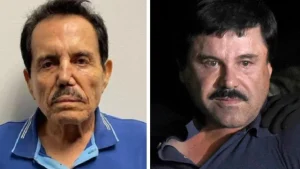
After the 1985 murder of DEA agent Enrique “Kiki” Camarena led to intense crackdowns and the Guadalajara Cartel’s fragmentation, key figures, including Joaquín “El Chapo” Guzmán Loera, Ismael “El Mayo” Zambada García, and others, formed alliances that coalesced into the Sinaloa Cartel by the late 1980s and early 1990s.
El Chapo, with his innovative smuggling tactics (including elaborate tunnels under the U.S.-Mexico border), and El Mayo, known for his low-profile strategic acumen, turned the group into Mexico’s premier trafficking syndicate. The cartel capitalized on declining Colombian routes, establishing dominance in the Pacific corridor and expanding operations into over 50 countries. By the early 2000s, it controlled much of the U.S. drug market, generating billions in annual revenue through bribes, violence, and alliances.
Key Leaders and Structure
Unlike more hierarchical groups, the Sinaloa Cartel operates as a loose federation of cells and factions that cooperate while maintaining operational autonomy. This decentralized model has helped it survive leadership losses.
Joaquín “El Chapo” Guzmán: Extradited to the U.S. in 2017, he is serving life in prison. His influence lingers through his family.
Ismael “El Mayo” Zambada: Longtime co-leader, arrested in the U.S. in July 2024 (allegedly after being betrayed and flown across the border by a Guzmán associate). He pleaded guilty to major charges in 2025 and faces life imprisonment.
Los Chapitos (The Little Chapos): El Chapo’s sons, Iván Archivaldo Guzmán Salazar, Jesús Alfredo Guzmán Salazar, Joaquín Guzmán López (arrested 2024), and Ovidio Guzmán López (extradited 2023), lead one major faction. Known for aggressive tactics and fentanyl focus.
Los Mayos / Mayiza: Loyal to El Mayo’s legacy, now led by his son Ismael “Mayito Flaco” Zambada Sicairos and other allies.
The cartel has no single boss; instead, factions handle regional plazas (territories) and collaborate on international routes.
Current Status and Internal Conflict (as of February 2026)
The 2024 arrest of El Mayo triggered a brutal internal war between Los Chapitos and Los Mayos (also called Mayiza), which has raged for over a year. The conflict erupted in September 2024, fueled by accusations of betrayal in El Mayo’s capture, and has caused thousands of homicides, disappearances, and displacements in Sinaloa, with homicide rates surging dramatically (e.g., up significantly in 2025 compared to prior years).
Los Chapitos control key areas like parts of Culiacán, Sonora, and Baja California, often allying with rivals like the Jalisco New Generation Cartel (CJNG) in some phases.
Los Mayos dominate rural Sinaloa, Durango, and other zones, with alliances including figures like “Chapo Isidro” from splinter groups.
Violence has spread to tourist areas like Mazatlán, disrupted daily life, and prompted massive military deployments. Despite arrests (including high-profile extraditions to the U.S. in batches of dozens in 2025-2026), the cartel persists, with ongoing fentanyl labs and smuggling networks. U.S. authorities continue targeting it through sanctions, seizures, and designations as a narco-terrorist entity.
Impact and Legacy
The Sinaloa Cartel has profoundly shaped the global drug trade and Mexico’s security crisis. It pioneered fentanyl’s rise as a cheap, potent synthetic opioid, contributing to hundreds of thousands of U.S. overdose deaths. Beyond drugs, it engages in extortion, migrant smuggling, arms trafficking, and money laundering.
Its resilience, surviving the captures of El Chapo, El Mayo, and others, highlights the challenges of dismantling decentralized cartels amid U.S. demand and corruption. As internal fighting continues into 2026, the group’s future remains uncertain: fragmentation could weaken it, or a victor might emerge stronger, potentially redrawing Mexico’s criminal landscape amid rival pressures from CJNG and government operations. The Sinaloa Cartel endures as a symbol of the enduring power of organized crime in the Americas, driven by profit, violence, and adaptability.