The Jalisco New Generation Cartel (Cártel Jalisco Nueva Generación, or CJNG), one of Mexico’s most powerful, violent, and rapidly expanding transnational criminal organizations, dominates much of the country’s illicit drug trade as of February 2026. Headquartered in Jalisco state, with strongholds in western Mexico (including Colima, Nayarit, and Michoacán), the CJNG has grown into a highly militarized force responsible for a major share of fentanyl, methamphetamine, cocaine, and other drugs entering the United States. Designated by the U.S. as a Foreign Terrorist Organization (FTO) and Specially Designated Global Terrorist (SDGT) in February 2025, it is accused of fueling the U.S. opioid crisis through aggressive production and distribution networks spanning over 40 countries.
Origins and Rapid Ascent
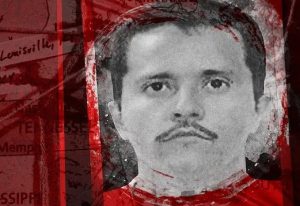
The CJNG emerged around 2010 as a splinter from the Milenio Cartel (an ally of the Sinaloa Cartel) following internal fractures and the 2009 arrest of key figures. Founded by former police officer Nemesio Rubén Oseguera Cervantes, alias “El Mencho”, the group quickly distinguished itself through extreme brutality, sophisticated tactics, and ambitious expansion. By the mid-2010s, it had broken from Sinaloa alliances and launched aggressive campaigns to seize territories, often using public displays of violence to intimidate rivals and communities.
Unlike more decentralized groups, the CJNG employs a hierarchical, centralized structure with regional leaders reporting directly to top command. It also uses a “franchise” model, affiliating with local criminal cells for rapid growth while maintaining strict control to prevent internal betrayals.
Key Leaders and Organization
The cartel remains under the command of El Mencho (born July 17, 1966), who has evaded capture despite a $15 million U.S. reward (increased in late 2024) and intense manhunts. El Mencho’s low-profile style has fueled occasional (unconfirmed) rumors of his death or illness, but U.S. and Mexican authorities confirm he is alive and directing operations.
Other prominent figures include:
- Juan Carlos Valencia González (alias “El Pelón”), El Mencho’s stepson and de facto second-in-command.
- Julio Alberto Castillo Rodríguez (alias “El Chorro”), a senior lieutenant and El Mencho’s son-in-law.
- Family and close allies like Audias Flores Silva (overseeing meth labs) and others sanctioned by the U.S. in 2025.
The CJNG’s leadership has suffered setbacks: El Mencho’s son Rubén Oseguera González (“El Menchito”) was sentenced to life plus 30 years in the U.S. in March 2025 for drug trafficking and firearms offenses. Other relatives and high-ranking members have faced arrests, extraditions, and long sentences in 2025–2026.
Current Status and Operations (as of February 2026)
The CJNG has capitalized on the Sinaloa Cartel’s ongoing internal war (sparked by El Mayo Zambada’s 2024 arrest), which has weakened its rival and created opportunities for expansion. Reports from 2025 indicate tactical alliances between CJNG forces and the “Los Chapitos” faction (sons of El Chapo Guzmán) against the “Mayiza” (loyal to El Mayo’s family), particularly in Sinaloa, Baja California, Zacatecas, and border zones. This has helped CJNG gain territory, manpower, and influence without direct large-scale confrontation.
The group maintains a presence in much of Mexico (historically up to 28+ states) and engages in diversified crimes beyond drugs: extortion, fuel theft (“huachicol”), migrant smuggling, arms trafficking, money laundering (increasingly via cryptocurrency), and corruption of officials. Recent events include:
- Arrests of CJNG plaza bosses in Jalisco and Nayarit in early 2026.
- The February 2026 arrest of Tequila’s mayor and officials for alleged extortion of distillers in collusion with CJNG cells.
- U.S. transfers of dozens of wanted CJNG members (including those charged with narcoterrorism) in January 2026 batches.
CJNG is notorious for its paramilitary-style firepower (drones, RPGs, heavy weapons), recruitment camps involving torture and executions, and ostentatious violence—such as public displays, targeted killings (including of women and influencers), and attacks on security forces.
Impact and Legacy
The CJNG’s rise has intensified Mexico’s security crisis, contributing to high homicide rates, displacements, and economic disruption in contested areas. Its role in fentanyl production has drawn U.S. scrutiny, with sanctions targeting financial networks and leaders. While resilient to leadership losses, the group’s hierarchical nature makes it vulnerable to internal fractures (e.g., past breakaways in Colima and Jalisco).
As Mexico’s new administration under President Claudia Sheinbaum navigates shifting alliances and violence, the CJNG stands as arguably the most dominant cartel in early 2026, exploiting rivals’ weaknesses, adapting to enforcement pressures, and maintaining a terrifying reputation for brutality and ambition. Its trajectory underscores the challenges of combating decentralized yet highly organized transnational crime amid corruption, U.S. demand, and evolving tactics.